
Listen Here:
Click or simply search “Sigma Nutrition” on your podcast platform of choice.
Or listen directly on the Sigma website here.
Introduction
In the realm of nutrition science and health, understanding the intricate relationship between various factors and health outcomes is crucial yet challenging. How do we determine whether a specific nutrient genuinely impacts our health, or if the observed effects are merely coincidental? This intriguing question brings us to the core concepts of correlation and causation. You’ve likely heard the adage “correlation is not causation,” but what does this truly mean in the context of scientific research and public health recommendations? Can a strong association between two variables ever imply a causal relationship, or is it always just a statistical coincidence?
These questions are not merely academic; they are pivotal in shaping the guidelines that influence our daily lives. For instance, when studies reveal a link between high sodium intake and hypertension, how do scientists distinguish between a mere correlation and a true causal relationship? Similarly, the debate around LDL cholesterol and cardiovascular disease hinges on understanding whether high cholesterol levels directly cause heart disease, or if other confounding factors are at play. Unraveling these complexities requires a deep dive into the standards of proof and the different models used to assess causality in scientific research.
As we delve into these topics, we’ll explore how public health recommendations are formed despite the inherent challenges in proving causality. What methods do scientists use to ensure that their findings are robust and reliable? How do they account for the myriad of confounding variables that can skew results? By understanding the nuances of these processes, we can better appreciate the rigorous scientific effort that underpins dietary guidelines and health advisories.
Join us on this exploration of correlation, causation, and the standards of proof in nutrition science. Through real-world examples and critical discussions, we will illuminate the pathways from observational studies to actionable health recommendations. Are you ready to uncover the mechanisms that bridge the gap between scientific evidence and practical health advice? Let’s dive in and discover the fascinating dynamics at play.
Related resources
- Join the Sigma newsletter for free
- Subscribe to Sigma Nutrition Premium
- Become a member of Alan Flanagan’s Alinea Nutrition Education Hub
- Enroll in the next cohort of our Applied Nutrition Literacy course
- Related episode: 343 – Understanding Causality in Nutrition Science
- [01:32]Understanding Correlation and Causation
- [03:54]Historical Perspectives on Causality
- [06:33]Causal Models in Health Sciences
- [14:53]Probabilistic vs. Deterministic Causation
- [30:52]Standards of Proof in Public Health
- [36:44]Applying Causal Models in Nutrition Science
- [58:54]Key Ideas Segment (Premium-only)
The Hosts
Click through to your app of choice to listen and subscribe:
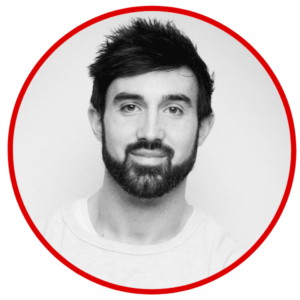
Dr. Alan Flanagan has a PhD in nutrition from the University of Surrey, where his doctoral research focused on circadian rhythms, feeding, and chrononutrition.
This work was based on human intervention trials. He also has a Masters in Nutritional Medicine from the same institution.
Dr. Flanagan is a regular co-host of Sigma Nutrition Radio. He also produces written content for Sigma Nutrition, as part of his role as Research Communication Officer.

Danny Lennon has a master’s degree (MSc.) in Nutritional Sciences from University College Cork, and he is the founder of Sigma Nutrition.
Danny is currently a member of the Advisory Board of the Sports Nutrition Association, the global regulatory body responsible for the standardisation of best practice in the sports nutrition profession.
Introduction to this Episode
In the realm of nutrition science and health, understanding the intricate relationship between various factors and health outcomes is crucial yet challenging. How do we determine whether a specific nutrient genuinely impacts our health, or if the observed effects are merely coincidental? This intriguing question brings us to the core concepts of correlation and causation. You’ve likely heard the adage “correlation is not causation,” but what does this truly mean in the context of scientific research and public health recommendations? Can a strong association between two variables ever imply a causal relationship, or is it always just a statistical coincidence?
These questions are not merely academic; they are pivotal in shaping the guidelines that influence our daily lives. For instance, when studies reveal a link between high sodium intake and hypertension, how do scientists distinguish between a mere correlation and a true causal relationship? Similarly, the debate around LDL cholesterol and cardiovascular disease hinges on understanding whether high cholesterol levels directly cause heart disease, or if other confounding factors are at play. Unraveling these complexities requires a deep dive into the standards of proof and the different models used to assess causality in scientific research.
As we delve into these topics, we’ll explore how public health recommendations are formed despite the inherent challenges in proving causality. What methods do scientists use to ensure that their findings are robust and reliable? How do they account for the myriad of confounding variables that can skew results? By understanding the nuances of these processes, we can better appreciate the rigorous scientific effort that underpins dietary guidelines and health advisories.
Join us on this exploration of correlation, causation, and the standards of proof in nutrition science. Through real-world examples and critical discussions, we will illuminate the pathways from observational studies to actionable health recommendations. Are you ready to uncover the mechanisms that bridge the gap between scientific evidence and practical health advice? Let’s dive in and discover the fascinating dynamics at play.
Useful Terminology for this Episode
| Key Terms & Acronyms |
|